Investment Property Deposit in 2026: $185,000 Cash for a $750,000 Purchase
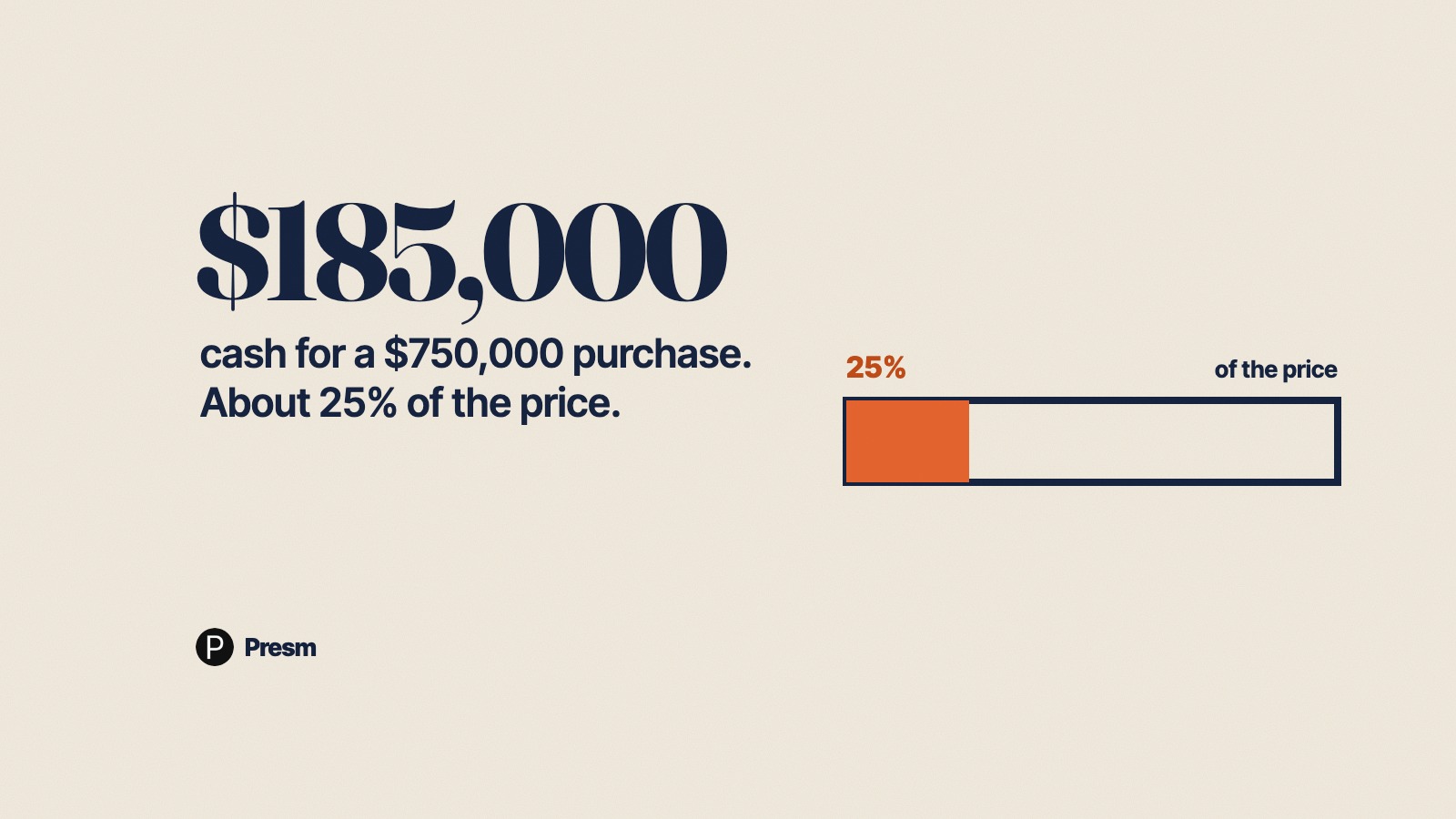
The textbook answer to "how much deposit do I need for an investment property" is 20% of the purchase price. The real-world answer for a $750,000 Brisbane investment property in 2026 is $185,000 — and most first-time investors only discover the gap when their broker walks them through the actual settlement statement.
This post breaks down what the cash requirement actually is, where each dollar goes, and the choices that move the headline number up or down.
The 20% Myth
"$750,000 property, 20% deposit means $150,000" — that arithmetic is correct only on the loan, not on what you need in your bank account. Banks lend up to 80% of the purchase price (the loan-to-value ratio). The remaining 20% is your deposit. But there is a second pile of cash you need that has nothing to do with the loan: the acquisition costs.
Acquisition costs include stamp duty, legal fees, building inspections, loan establishment, and a sensible cash buffer for surprises. None of these are lendable. All of them have to come from your own cash on day one.
Real Cash Required: $750,000 Brisbane Purchase, 80% LVR
Take the cleanest case — an 80% LVR purchase, no LMI, in Queensland which has the cheapest stamp duty among major states.
| Cost item | Amount |
|---|---|
| Deposit (20% of $750,000) | $150,000 |
| Stamp duty (QLD investor) | $20,045 |
| Legal/conveyancing | $1,800 |
| Building and pest inspections | $700 |
| Loan establishment fee | $700 |
| Cash buffer (3 months holding cost) | $11,500 |
| Total cash required | $184,745 |
The $11,500 buffer is the line investors most often skip. It is the line that turns a forced sale into a manageable problem when something unexpected happens — tenant default, hot water service replacement, gap between tenancies. Without it, you have no margin for the surprises that always happen.
The Same Purchase In Other States
Stamp duty drives most of the variation. Same $750,000 property, four states:
| State | Stamp duty | Total cash needed (incl. buffer) |
|---|---|---|
| QLD | $20,045 | $184,745 |
| NSW | $29,332 | $194,032 |
| VIC | $40,070 | $204,770 |
| WA | $30,415 | $195,115 |
- QLD
- $20,045
- NSW
- $29,332
- VIC
- $40,070
- WA
- $30,415
- QLD
- $184,745
- NSW
- $194,032
- VIC
- $204,770
- WA
- $195,115
The $20,000 spread between Queensland and Victoria on a single transaction is the strongest argument for state diversification.
Going To 90% LVR With LMI
If you only have $130,000-$140,000 of cash, you can still complete the same $750,000 purchase by accepting a 90% LVR loan with capitalised LMI.
| Cost item | Amount |
|---|---|
| Deposit (10% of $750,000) | $75,000 |
| Stamp duty (QLD) | $20,045 |
| Legal/conveyancing | $1,800 |
| Building and pest | $700 |
| Loan establishment | $700 |
| LMI premium (capitalised into loan) | $0 (added to loan balance) |
| Cash buffer | $11,500 |
| Total cash required | $109,745 |
The 90% LVR path requires $75,000 less cash but adds approximately $14,850 to the loan balance (the LMI premium). Over the life of the loan, that LMI gets repaid with interest — at 6.20% over a 25-year P&I period, the total cost of the LMI including interest is approximately $29,000.
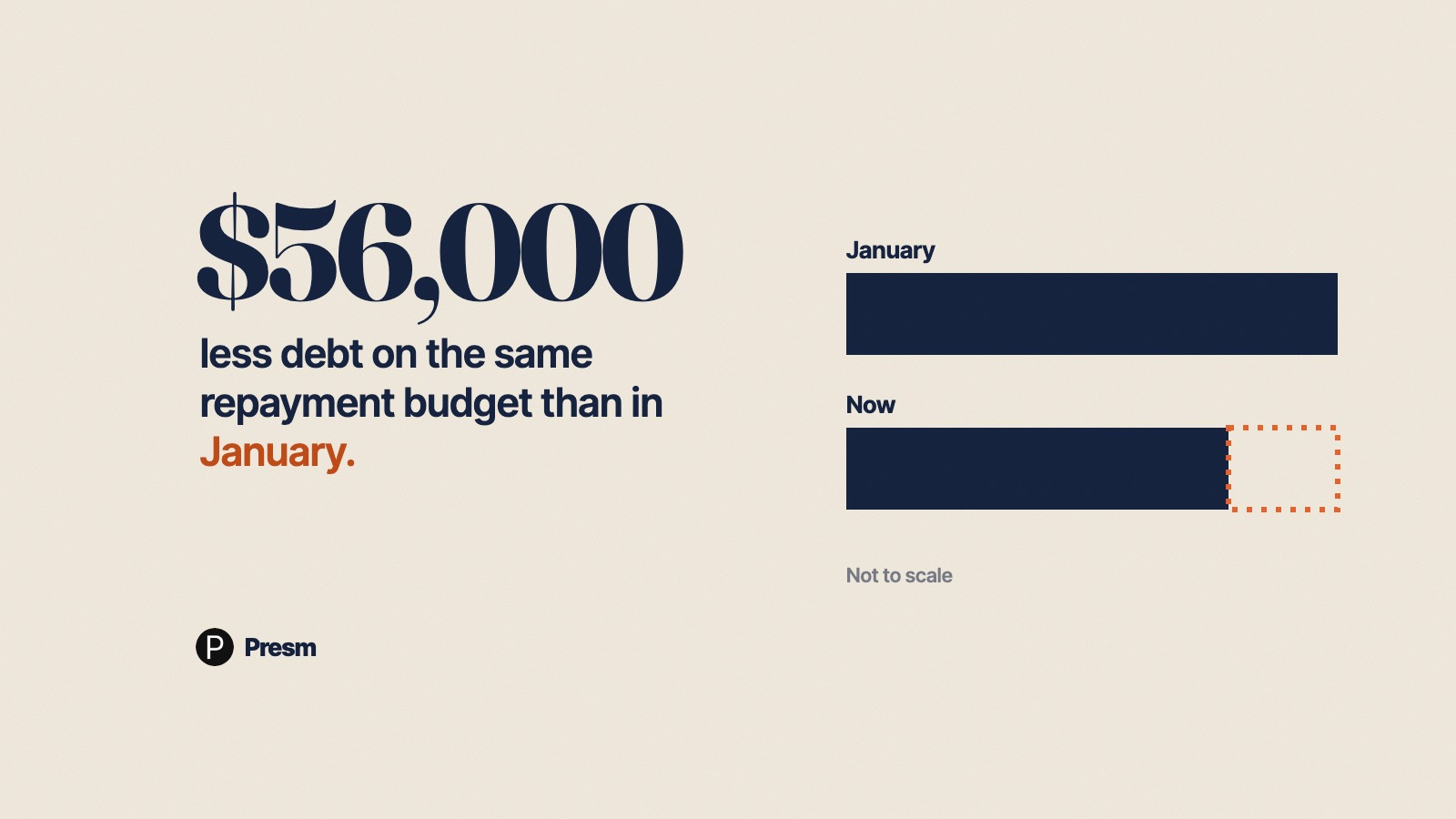
The break-even calculation is whether the property's growth in the time you would otherwise be saving the additional deposit exceeds $29,000. If the property grows at 5% per annum and you would have spent 18 months saving the additional deposit, the answer is usually yes — the property would have grown $56,000+ in that period.
The 95% LVR Option (Use Sparingly)
A 95% LVR investment loan is available from some lenders but the LMI premium gets steep — typically 4.0-4.5% of the loan, or $30,000-$35,000 on a $750,000 purchase. The break-even maths still works in fast-growing markets but the buffer for adverse events is much thinner. Use only when the property and market thesis are strong.
The Borrowing Capacity Constraint
Cash is one constraint. Borrowing capacity is the other. A $145,000 PAYG earner with no existing debt and good credit history can typically borrow up to:
- $720,000 to $780,000 with 80% LVR investment lending policy
- $740,000 to $810,000 with 90% LVR (the LMI loan can be slightly larger because the lender is insured)
The cash constraint and the borrowing constraint usually meet at similar price points. Investors with $185,000 of cash can usually qualify for the loan that cash supports. Investors with $130,000 can usually qualify for a 90% LVR loan to the same purchase price.
If they do not match — too much cash for your borrowing capacity — the bottleneck is income, not deposit. Time to either grow income, partner with a co-borrower, or step the purchase price down.
If your borrowing capacity exceeds your cash — too much capacity, not enough deposit — the bottleneck is savings. Time to keep saving, accept LMI to bridge the gap, or take a guarantor loan from a parent's property.
The Five Deposit Sources
Most investors fund the deposit from a combination of:
Source 1: Cash savings. The default. Visible to the lender, no special structuring required.
Source 2: Equity in an existing property. Refinance the home or another investment to release equity for use as a deposit on the next purchase. The released equity has to be lent against; it is debt-funded deposit, not bonus capital.
Source 3: Family guarantor. A parent's property is used as additional security for a portion of the loan, allowing borrowing at higher LVR without LMI. The parent's exposure is real — if you default, the bank can move on their property.
Source 4: First Home Super Saver Scheme. First-home owner-occupiers can withdraw voluntary super contributions (up to $50,000 lifetime) as deposit. Does not apply to pure investment purchases.
Source 5: Personal loan. Generally a poor option. Banks treat personal loan repayments as income reductions in serviceability calculations, often cancelling out the borrowing capacity gain from the additional deposit.
What Actually Matters For The First Investment
Three priorities for the first-time investor:
Priority 1: Maintain a buffer. Investors who deploy 100% of their cash at settlement face an 80% chance of needing additional cash within 18 months for one of the predictable events (vacancy, repairs, rate change). Plan for it.
Priority 2: Match the LVR to the property and market. A 90% LVR purchase makes sense in a high-growth market where the cycle is early. It makes less sense at the top of a cycle or in a flat market.
Priority 3: Run multiple state scenarios. The $20,000 difference in cash required between Queensland and Victoria changes which property you can buy and where your buffer ends up. Run the Stamp Duty Calculator on each candidate state.
Where Most First-Time Investors Get This Wrong
Mistake 1: Forgetting the cash buffer. Spend the entire savings balance at settlement. Three months later, the hot water service fails ($1,800), the tenant gives notice ($2,400 of vacancy), and the property manager sends a $600 invoice. The investor scrambles, takes on credit card debt, and learns the lesson the expensive way.
Mistake 2: Calculating the LVR on the wrong base. Some investors calculate "20% deposit" against the purchase price plus stamp duty plus all costs. The bank does not. The LVR is on the purchase price alone (or sometimes the lower of price and valuation).
Mistake 3: Using all available equity from existing property. Refinancing the family home to 80% LVR for the deposit on an investment property leaves no equity buffer for surprises in either property. Maintain a position where you could refinance again if needed — typically by stopping at 70-75% LVR on the home.
Mistake 4: Treating LMI as wasted money. LMI is a tool. Used for the right deal at the right time, it accelerates the entry and the growth capture is worth the premium.
Ready To Run Your Numbers
Before serious property hunting, run your specific numbers through:
- Borrowing Power Calculator — confirms what loan size your income supports
- Stamp Duty Calculator — exact duty in your state and price band
- LMI Calculator — premium cost at different LVRs
- Loan Repayment Calculator — monthly cash flow at the chosen loan size
These four numbers together tell you what you can buy, where, and at what cash position. For broader first-time investor guidance, see our first investment property beginners guide.
Frequently Asked Questions
What is the minimum deposit for an investment property?
Most lenders accept 5% deposit (95% LVR) on investment loans, but the LMI premium at that level is steep — 4-4.5% of the loan, around $32,000 on a $750,000 purchase. Many investors prefer 10-15% deposit (88-90% LVR) where LMI is more reasonable, or 20% deposit (80% LVR) to avoid LMI entirely.
Can I use my super for the deposit?
The First Home Super Saver Scheme applies only to owner-occupier first-home purchases, not investment purchases. SMSF property is different — the SMSF itself can buy property using its existing balance plus an LRBA loan, but you cannot use your personal super for a personal-name investment.
Do I need 20% deposit or just enough to avoid LMI?
20% deposit and "avoiding LMI" are usually the same threshold for owner-occupied property, but investment lending can have stricter LVR caps with some lenders. Some lenders apply a maximum 80% LVR to investment loans without LMI; others go to 88-90%. Check policy before committing.
Can I borrow my deposit?
You can use a home equity loan against another property as the deposit source. You cannot use a personal loan or credit card — banks see those as additional debt that reduces your serviceability for the new investment loan.
How long does it take to save a deposit?
Depends entirely on income, savings rate, and target purchase price. A $145,000 earner saving 25% of after-tax income (around $30,000 per year) takes approximately 5-6 years to save $185,000 from zero. Most investors use a combination of savings and equity from existing property to compress the timeline.
Presm
Property investment insights from the Presm research team.
Want to put these insights into action?
Presm gives you the tools to model, track, and grow your property portfolio with confidence.