Land Tax 2026: Why the Same Portfolio Costs $32,400 in Victoria and Zero in Queensland

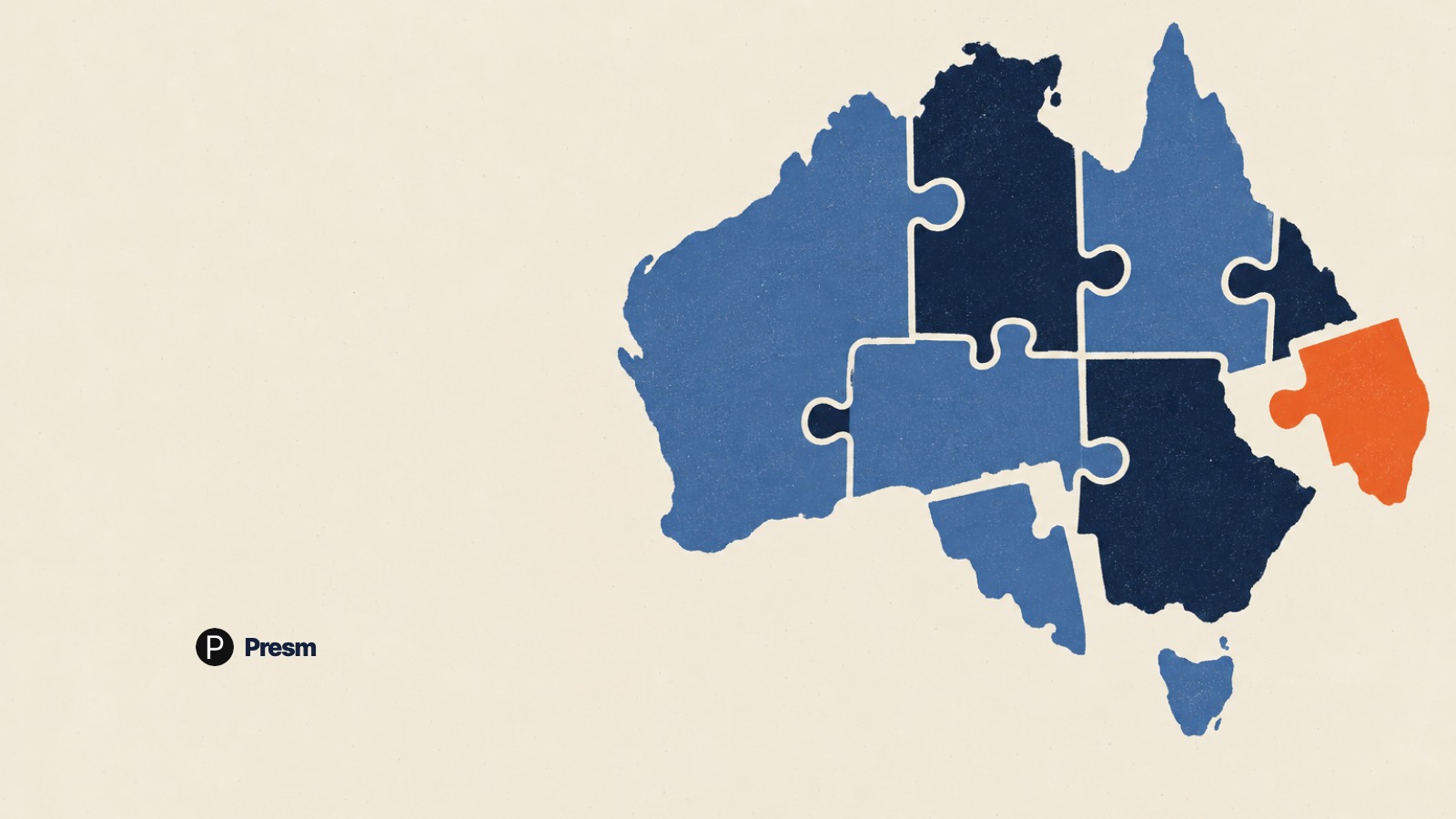
A four-property investor with $2.4 million of land value spread across Victoria pays $32,400 in annual land tax. The same investor with the same land value spread across four Queensland properties — under the right structure — pays zero. That is not a typo. It is what happens when the legislation is read state by state and the structuring is done before the assets are bought, not after.
Land tax is the silent portfolio killer. Investors model interest rates, vacancy rates, and capital growth, and forget the annual line item that grows with their portfolio whether the property is occupied or not. Over a 20-year hold, the wrong state choice costs $592,000 of compounded after-tax money on a single portfolio. This is structural, not marginal.
What Land Tax Is And Why It Hits Different Investors Differently
Land tax is a state-level annual tax on the unimproved land value of investment property. The Valuer-General sets the land value (not the property value — just the land underneath). Each state applies its own threshold and rate scale to the total land value held by the same owner in that state.
Three rules drive every land tax calculation:
- Land tax is per-state, per-owner. Holding $1.2 million of land in NSW and $1.2 million in QLD does not aggregate. Each state assesses separately. This is the diversification opportunity.
- Thresholds are per-owner, not per-property. A husband and wife as joint owners get one threshold combined, not two. Holding through different entities can multiply thresholds — but only if the structures are genuinely separate.
- PPOR is exempt. Your home is not counted. Investment properties are.
The Valuer-General re-assesses unimproved land value annually or biennially depending on jurisdiction. You receive a notice of valuation and have a window (typically 60 days) to object if you believe the value is incorrect.
State-by-State Thresholds and Rates, FY 2025-26
| State | Threshold (resident) | Top rate | Where the bracket peaks | Trust treatment |
|---|---|---|---|---|
| NSW | $1,075,000 | 1.6% + premium 2% | Premium kicks in at $6,571,000 | Most discretionary trusts: NO threshold, surcharge from $1 |
| VIC | $50,000 | 2.55% | Above $3,000,000 | 0.375% trust surcharge stacks |
| QLD | $600,000 (individuals) | 2.75% | Above $10,000,000 | $350,000 threshold for trusts/companies |
| SA | $732,000 | 2.4% | Above $1,506,000 | Trust surcharge applies |
| WA | $300,000 | 2.67% | Above $11,000,000 | Companies: separate threshold |
| TAS | $124,999 | 1.5% | Above $750,000 | Trusts treated as separate landowners |
| ACT | $0 (no threshold; rate applies from $1) | ~1.27% | Tiered | N/A — no threshold concept |
| NT | No land tax | — | — | — |
- NSW
- $1,075,000
- VIC
- $50,000
- QLD
- $600,000 (individuals)
- SA
- $732,000
- WA
- $300,000
- TAS
- $124,999
- ACT
- $0 (no threshold; rate applies from $1)
- NT
- No land tax
- NSW
- 1.6% + premium 2%
- VIC
- 2.55%
- QLD
- 2.75%
- SA
- 2.4%
- WA
- 2.67%
- TAS
- 1.5%
- ACT
- ~1.27%
- NT
- —
- NSW
- Premium kicks in at $6,571,000
- VIC
- Above $3,000,000
- QLD
- Above $10,000,000
- SA
- Above $1,506,000
- WA
- Above $11,000,000
- TAS
- Above $750,000
- ACT
- Tiered
- NT
- —
- NSW
- Most discretionary trusts: NO threshold, surcharge from $1
- VIC
- 0.375% trust surcharge stacks
- QLD
- $350,000 threshold for trusts/companies
- SA
- Trust surcharge applies
- WA
- Companies: separate threshold
- TAS
- Trusts treated as separate landowners
- ACT
- N/A — no threshold concept
- NT
- —
Victoria's $50,000 threshold is the lowest in mainland Australia. It catches almost every investment property. Queensland's $600,000 threshold means a single Bulimba house with $400,000 land value attracts no land tax at all.
Worked Example: $2.4M Portfolio, Three Different State Configurations
An investor holds four properties with $600,000 land value each (total $2.4 million). The structure is the same in each scenario — held in personal names, four separate properties.
Scenario 1: All four in Victoria
- Total Victorian land value: $2,400,000
- Threshold deduction: $50,000
- Taxable amount: $2,350,000
- VIC scale (graduated rates from $50K threshold to top rate of 2.55%):
- $50K-$100K at 0.2% = $100
- $100K-$300K at 0.5% = $1,000
- $300K-$600K at 0.8% = $2,400
- $600K-$1M at 1.3% = $5,200
- $1M-$1.8M at 2.0% = $16,000
- $1.8M-$2.4M at 2.3% = $13,800
Total: roughly $32,400 per year.
Plus the COVID debt levy of 0.1% on holdings above $300,000 = approximately $2,100 additional.
True annual land tax: approximately $34,500.
Scenario 2: All four in Queensland
- Total Queensland land value: $2,400,000
- Threshold deduction: $600,000
- Taxable amount: $1,800,000
- QLD individual scale (1.0% to 2.75%):
- First $1,000,000: $4,500
- Next $300,000 at 1.65%: $4,950
- Next $1,000,000 at 1.95%: $19,500 (only $500K applies)
- On $500,000: $9,750
Total: approximately $14,500 per year.
Scenario 3: All four in NSW
- Total NSW land value: $2,400,000
- Threshold deduction: $1,075,000
- Taxable amount: $1,325,000
- Applied at 1.6% + $100 base: $21,300 per year
Scenario 4: One property in each of QLD, NSW, SA, WA (geographic diversification)
- QLD land $600,000: at threshold, $0
- NSW land $600,000: under threshold $1.075M, $0
- SA land $600,000: under threshold $732,000, $0
- WA land $600,000: above threshold $300,000, taxable $300,000 at scale, ~$2,800
Total annual land tax: $2,800.
The compounding effect over 20 years
Same portfolio, four configurations, different long-run land tax cost:
| Configuration | Annual land tax | 20-year cost |
|---|---|---|
| All Victoria | $34,500 | $690,000 |
| All Queensland | $14,500 | $290,000 |
| All NSW | $21,300 | $426,000 |
| Diversified across 4 states | $2,800 | $56,000 |
- All Victoria
- $34,500
- All Queensland
- $14,500
- All NSW
- $21,300
- Diversified across 4 states
- $2,800
- All Victoria
- $690,000
- All Queensland
- $290,000
- All NSW
- $426,000
- Diversified across 4 states
- $56,000
The geographic diversification position pays $2,800 per year. The Victoria-only position pays $34,500 per year — a $31,700 difference, every year, in perpetuity.
Over a 20-year hold, the gap compounds to $634,000 of after-tax money. This is not optimisation at the margin. This is the difference between a portfolio that scales and one that gets eaten.
The Trust Trap That Catches Most Investors
Investors hear "trusts get an extra threshold" and assume trusts are a costless upgrade. They are not.
Victoria: The trust surcharge stacks
In Victoria, a discretionary trust is taxed at a special trust surcharge — 0.375% on every dollar of taxable land, with the threshold reduced. The effective rates are higher than personal name holding, not lower.
Worked example: $1,000,000 of land value in a Victorian discretionary trust.
Personal name calculation:
- Threshold deduction: $50,000
- Taxable: $950,000
- Tax: approximately $7,575
Discretionary trust calculation:
- Threshold (limited to $25,000 for some trusts): minimal
- Trust surcharge: 0.375% on full $1,000,000 = $3,750
- Plus general scale rates with reduced threshold
- Total: approximately $13,750
The trust costs $6,175 more per year than personal name on the same property in Victoria.
NSW: Threshold denied for most discretionary trusts
In NSW, a fixed trust with a pre-2023 election can access the threshold, but most discretionary trusts do not get the threshold and pay surcharge rates from the first dollar of land value.
A $1,000,000 land value held in a NSW discretionary trust without election:
- No threshold deduction
- Surcharge rates apply from $1
- Annual land tax: approximately $19,000
The same property in personal name (under the $1,075,000 threshold) attracts $0 in land tax.
Queensland: Lower threshold, higher rates for trusts
Discretionary trusts in QLD get a $350,000 threshold (lower than the $600,000 for individuals) and slightly higher rates above that.
For most investors with portfolios under $3-4 million, holding in personal name across multiple states beats running a trust structure on land tax alone. The trust threshold trick only works in specific circumstances:
- Fixed unit trusts with named unitholders who satisfy state-specific tests
- Where the trust is genuinely beneficially separate from the principal
- Where the cost of running the structure (annual accounting $1,500-$3,000, ASIC if a corporate trustee, plus structural complexity) is justified by the saving
What Counts As A Single Owner
The aggregation rules trip up well-intentioned investors:
- Joint ownership is treated as a single landowner per joint group. Husband-wife joint ownership across four properties = one landowner = one threshold across all four.
- Tenants in common is treated per individual share. Mr and Mrs Smith owning 50/50 each get assessed on their 50% slice individually — and each gets their own threshold.
- Discretionary trust is one landowner per trust. Two trusts with overlapping beneficiaries are still two landowners — and the Entity Land Tax Simulator is the tool to model exactly which structure costs what.
- SMSF is a separate landowner. Each fund gets its own threshold. SMSF land tax in Victoria still incurs the trust surcharge, but the threshold applies separately from your personal holdings.
Where This Goes Wrong
Failure mode 1: Buying the second Victorian property
The first one might be under threshold. Adding a second compounds land value above $50,000 fast, and the marginal rate above $1.8 million is brutal.
A Bayside (3186) house with $1,100,000 land value, added to an existing $700,000 land value Victorian holding, increases the annual land tax bill from $4,070 to $26,170. That is the cost of being state-blind.
Failure mode 2: Joint ownership when one spouse already holds investments
Adding a property to joint names means it inherits the joint-name landowner — which already has its own aggregated land value. If one spouse owns the home solo and the other owns investment properties solo, separate landowners exist. Putting everything into joint names destroys the segregation.
A worked example: husband owns one investment property (land value $600,000) in his name. Wife owns no property. They consider buying their second investment in joint names.
Path A: Joint ownership. New joint landowner has $600,000 of attributable land value (his), plus the new property's $500,000. Total $1,100,000. Aggregated and assessed.
Path B: Wife owns the new property in her sole name. Wife is a separate landowner with $500,000 of land value — under the threshold in most states. Husband's land value stays at $600,000.
Path B saves $4,000+ per year of land tax on this single decision in NSW. In Victoria, the saving is $6,000+.
Failure mode 3: Forgetting absentee surcharges
NSW, VIC, and QLD all charge an absentee/foreign surcharge on top of land tax. In Victoria the absentee surcharge is 4% of unimproved value — $40,000 a year on $1 million of land.
This catches Australian residents who spend extended periods overseas without correctly establishing their tax residency. The 183-day rule is not the only test — the State Revenue Office can deem you absentee on a wider definition.
Failure mode 4: Land value reassessments that the investor never appeals
The Valuer-General re-issues land values annually or every two years depending on jurisdiction. If your land value jumped 25% but comparable sales do not support it, you have 60 days in most states to lodge an objection. Investors who ignore the notice eat the new tax bill.
A $200,000 incorrect land value increase costs $3,200/year at 1.6% in NSW. Over 10 years that is $32,000 of unnecessary tax.
What To Actually Do
Run your portfolio through the Land Tax Calculator to see what you owe today. Run the same portfolio through the Entity Land Tax Simulator to see what the same land would cost in alternative structures.
Before adding the next property, model the marginal land tax cost in each candidate state. The cheapest holding state is usually QLD or SA below the threshold, NSW between $1 million and $5 million of land value, and almost never Victoria.
For broader portfolio strategy that incorporates land tax decisions from day one, see our scaling property portfolios in Australia guide. For how the strategy fits into a long-term portfolio plan, see our building successful portfolio guide.
Frequently Asked Questions
Is land tax deductible against rental income?
Yes. Land tax paid on a property used to produce assessable income is deductible under section 8-1 of ITAA 1997 in the year it is incurred. Land tax on the family home is not deductible.
Does land tax apply to my home?
No. The principal place of residence is exempt in every state. The exemption requires you to genuinely live there — using a property as a holiday house or short-term rental can disqualify the PPOR exemption.
How is the land value determined?
Each state's Valuer-General assesses unimproved capital value of the land annually or biennially. The valuation excludes buildings and improvements — it is the land alone, valued as if vacant. You receive a notice of valuation and have a window (typically 60 days) to object.
Can I avoid land tax by buying through a company?
A company is a separate landowner and gets its own threshold in most states, but companies do not get the 50% CGT discount on disposal. The land tax saving is usually wiped out by the CGT bill on exit. The Entity Land Tax Simulator models this trade-off explicitly.
What happens if I do not pay land tax on time?
Penalty interest accrues at the state's prescribed rate (typically 8-10% per annum), and the State Revenue Office can place a charge on the property that prevents settlement on a future sale. Land tax debts are not extinguished by selling the property — they follow the owner who held the property on the assessment date.
Presm
Property investment insights from the Presm research team.
Want to put these insights into action?
Presm gives you the tools to model, track, and grow your property portfolio with confidence.